How Long Does Asphalt Paving Last? A Complete Guide for Homeowners
Introduction;
Here's something most homeowners don't find out until it's too late: the difference between an asphalt driveway that lasts 12 years and one that lasts 25 often comes down to a handful of simple habits, not the quality of the asphalt itself.
The Problem: Nobody Gives You a Straight Answer
Ask five different contractors how long an asphalt driveway should last, and you'll probably get five different answers. Some will say 15 years. Others will say 20, or even 30 if you're lucky. This inconsistency leaves homeowners in a frustrating spot you've just spent thousands of dollars on a new driveway, and you genuinely don't know whether you're looking at a decade of use or three.
It gets more confusing when your neighbor's driveway, installed around the same time as yours, starts cracking and crumbling years before yours does or vice versa. Suddenly it feels less like a predictable investment and more like a gamble.
The truth is, asphalt lifespan isn't random, and it isn't purely about luck or the quality of the original installation either. It's largely determined by what happens after installation specifically, how consistently the driveway receives proper pavement maintenance work over the years. Understanding this distinction is the key to getting the most value out of your investment, and it's exactly what we're going to break down.
The Slow Breakdown: What Actually Determines Asphalt Lifespan
Let's slow down and look at the real factors that decide how long your driveway will last, because the answer is more nuanced and more within your control than most people realize.
Factor 1: Installation Quality Sets the Foundation
Before we even get to maintenance, it's worth saying clearly: installation quality matters enormously. A driveway built on a poorly compacted base, with insufficient asphalt thickness, or installed in the wrong weather conditions will underperform no matter how well you maintain it afterward.
Proper installation includes adequate excavation, a well-compacted gravel base, correct drainage slope, and asphalt laid at the right thickness and temperature. This is the building block for all other things!
Factor 2: Climate and Environmental Exposure
Where you live plays a bigger role in asphalt driveway lifespan than most homeowners expect. Regions with harsh winters and frequent freeze-thaw cycles put more stress on asphalt because water repeatedly seeps into small cracks, freezes, expands, and forces those cracks wider. Hot climates bring their own challenges too, as intense UV exposure gradually dries out and oxidizes the asphalt binder, making the surface brittle over time.
Even within the same city, driveways facing direct afternoon sun tend to age faster than shaded ones, and low-lying areas prone to water pooling deteriorate faster than well-drained ones.
Factor 3: Traffic Load and Usage Patterns
A driveway used daily by two sedans wears very differently than one regularly parked with an RV, boat trailer, or delivery trucks. Heavier and more frequent loads compress the asphalt more aggressively, and repeated stress in the same spot like where tires consistently turn can accelerate localized wear.
Factor 4: Maintenance Consistency (The Biggest Variable)
This is, by far, the factor homeowners have the most control over and the one that makes the biggest difference in outcomes. Two identical driveways, installed by the same crew in the same week, can age completely differently depending on how consistently they receive care.
Consistent asphalt driveway maintenance cleaning, crack sealing, and periodic sealcoating can extend a driveway's life by 5 to 10 years compared to one that's left untouched after installation. That's not a small difference. It's often the gap between replacing your driveway once in 20 years versus twice.
Average Lifespan: What to Realistically Expect
So, with all these variables in play, what's a realistic number? Here's a breakdown based on maintenance level and typical conditions.
As the table shows, the gap between minimal care and a premium maintenance program can nearly triple your driveway's usable life. That's a significant return on what is, comparatively, a small ongoing investment.
The Sealcoating Factor: Why It Matters More Than People Think
If there's one single service that has the biggest impact on longevity, it's sealcoating. Asphalt is a porous material held together by a binder that degrades when exposed to UV rays, water, and chemicals like oil and gasoline. Sealcoating essentially recoats that binder, protecting it from the elements and slowing the oxidation process that makes asphalt brittle and prone to cracking.
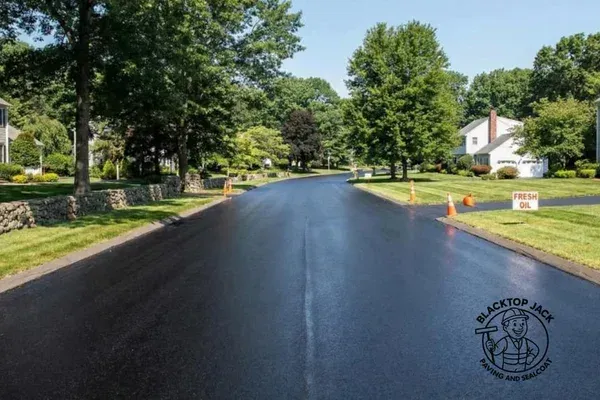
Homeowners who invest in regular paving and sealcoating typically notice their driveway maintains its rich black color and smooth texture for years longer than one left unsealed, which fades to gray and becomes rough and porous.
It's worth noting that not all sealcoating is created equal. Working with a provider that offers genuinely superior sealcoating and paving using quality, asphalt-based sealants applied at the correct thickness and cure time makes a measurable difference compared to a rushed, low-cost job that wears off within a year.
Warning Signs Your Driveway's Lifespan Is Shortening
It helps to know what early deterioration actually looks like, so you can act before small issues become expensive ones:
Fading from black to gray a sign the protective sealcoat has worn away and UV damage is beginning
Hairline cracking often the first visible sign of binder breakdown or base movement
Alligator cracking (a web-like pattern) indicates more serious structural fatigue, often from water intrusion into the base
Standing water after rain a drainage issue that will accelerate base erosion if not corrected
Rough, crumbly texture suggests the asphalt is losing flexibility and becoming brittle
Catching these signs early and addressing them through professional asphalt paving and sealcoating work is far more cost-effective than waiting until full resurfacing becomes the only option.
Building a Maintenance Plan That Actually Works
The good news is that extending your driveway's lifespan doesn't require anything complicated just consistency. Here's a simple, realistic framework:
Clean regularly. Sweep debris and address oil or fluid stains promptly to prevent binder breakdown.
Inspect twice a year. Spring and fall checks help catch cracks and drainage issues before winter or summer stress accelerates them.
Seal cracks as they appear. Don't wait for a "big enough" crack smaller cracks are cheaper and faster to seal.
Sealcoat every 2–3 years. This is the single most impactful thing you can do for long-term durability.
Address drainage problems immediately. Standing water is one of the fastest ways to undermine your driveway's base.
Homeowners who follow a plan like this rarely find themselves facing a surprise replacement bill. Instead, their driveway ages gradually and predictably, giving them time to plan and budget for eventual resurfacing decades down the line rather than scrambling for an emergency fix.
For a deeper, more detailed look at how professional maintenance schedules are structured season by season, BlacktopJack has a comprehensive resource on <a href=>asphalt pavement maintenance</a> that's worth reading if you want to build a plan tailored to your specific climate and usage.
Why Professional Maintenance Outperforms DIY Long-Term
It's entirely possible to handle basic cleaning and minor crack touch-ups yourself. But when it comes to full sealcoating applications or diagnosing early-stage structural issues, professional expertise makes a real difference. Commercial-grade materials, correct application thickness, and proper curing conditions aren't easy to replicate with store-bought products and a weekend of DIY effort.
A team that specializes in pavement maintenance work will also evaluate your driveway's specific wear patterns and recommend a maintenance schedule tailored to your climate, traffic load, and drainage something a generic, one-size-fits-all approach simply can't offer.
The Clear Takeaway
So, how long does asphalt paving actually last? The honest answer is: it depends far more on you than on the asphalt itself. With minimal care, you might get 10 to 12 years. With consistent, professional maintenance, that same driveway can realistically last 20 to 25 years or more. The material has the potential for a long lifespan built in but only consistent care unlocks it.
If you take away one thing from this guide, let it be this: your driveway's lifespan isn't fixed the day it's installed. It's shaped continuously by the choices you make afterward, and a small, consistent maintenance investment pays for itself many times over by delaying or entirely avoiding a costly full replacement.
Ready to Extend Your Driveway's Lifespan?
If you want your asphalt driveway to last decades instead of just years, the team at BlacktopJack can help you build a maintenance plan tailored to your home, climate, and budget. From sealcoating to crack repair to full inspections, we handle every stage of the process with quality materials and experienced hands.
Contact BlacktopJack today for a free driveway assessment and quote and start protecting your investment before small issues turn into costly ones.