Asphalt Driveway Replacement vs Resurfacing: Which Does Your Property Need?
Introduction:
Resurfacing an asphalt driveway typically costs 40% to 60% less than a full replacement, but it only works if the base beneath the surface is still structurally sound, which means choosing the wrong option can either waste money or leave you with a driveway that fails again within a year or two. If you're staring at a cracked, aging, or uneven driveway and trying to figure out whether you need asphalt driveway resurfacing or a complete tear-out, you're facing one of the most common and most expensive decisions a property owner makes. Getting it right the first time protects both your budget and your pavement's long-term performance.
The Problem: Two Options, One Confusing Decision
Most homeowners and business owners don't have a background in pavement science, so when a contractor says "you could resurface or replace," it's hard to know which recommendation actually fits your situation. The confusion usually comes down to a few recurring concerns:
Not knowing whether the cracking is a surface issue or a base failure
Worrying that resurfacing is just a cheaper band-aid that won't last
Assuming replacement is always "better" because it's more expensive
Uncertainty about how long each option will actually hold up
Difficulty comparing quotes when contractors describe the same job differently
This confusion isn't limited to homeowners. Property managers searching for commercial paving and sealcoating face the same dilemma on a larger scale, where the cost difference between resurfacing and full replacement can mean tens of thousands of dollars across a parking lot.
Understanding the Difference
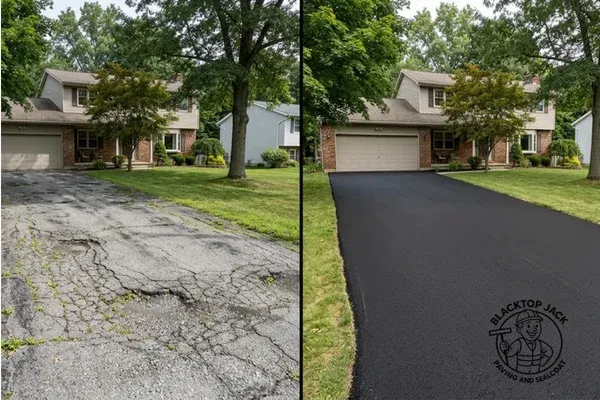
Resurfacing, sometimes called an asphalt overlay, involves applying a new layer of hot asphalt directly over the existing surface after minor repairs and cleaning. It restores a smooth, fresh surface without removing what's underneath.
Replacement means removing the entire existing driveway or lot down to the base, correcting any drainage or sub-base issues, and rebuilding the pavement from the ground up.
The deciding factor between the two isn't how the surface looks it's what condition the base layer is in. A stable base with a worn top layer is an excellent candidate for resurfacing. A failing, shifting, or waterlogged base means resurfacing will only mask the problem temporarily before it resurfaces, often literally, as new cracks within a year.
The Solution: How to Tell Which One You Need
Here's a practical comparison to help you evaluate your own pavement before calling a contractor.
Factor | Resurfacing Is Likely Right | Replacement Is Likely Needed |
|---|---|---|
Cracking | Minor to moderate surface cracks | Deep, widespread, interconnected cracking |
Base condition | Stable, no sinking or soft spots | Sinking, shifting, or soft in multiple areas |
Drainage | Water drains properly elsewhere | Persistent pooling across large sections |
Age of pavement | Under 15–18 years old | 20+ years old with extensive wear |
Previous repairs | First major repair needed | Multiple failed patches over time |
Typical cost | 40–60% less than replacement | Full project cost, base to surface |
Expected lifespan after work | 8–15 years | 20–30 years |
If your pavement falls mostly in the resurfacing column, you can likely save a significant amount of money while still getting a smooth, durable surface. If it falls in the replacement column, resurfacing would be a short-term fix that ends up costing more over time, since you'd eventually need the full replacement anyway on top of what you already spent.
For a deeper, side-by-side financial breakdown, this detailed comparison on driveway resurfacing vs. replacement and which saves more money walks through real cost scenarios that can help you estimate your own project more precisely.
Why the Base Matters More Than the Surface
It's tempting to judge a driveway by what you can see, but the base layer is what actually carries the weight of vehicles and resists freeze-thaw damage. Resurfacing over a compromised base is similar to repainting a wall with water damage underneath it looks better immediately, but the underlying problem keeps working against the new layer. A contractor who takes the time to assess the base, rather than just quoting based on visible cracks, is giving you a far more reliable recommendation.
Where Sealcoating and Paving Fit Into the Decision
Whichever option you choose, the work doesn't end once the new surface is down. Pairing resurfacing or replacement with a consistent sealcoating schedule is what protects your investment long-term. Combined sealcoating and paving service extends the life of fresh asphalt by shielding it from UV rays, water penetration, and everyday chemical exposure from oil and de-icing salt.
This is especially important for businesses. Searching for paving and sealcoating near me after a resurfacing or replacement project is a smart next step, since a properly sealed surface resists cracking far longer than one left unprotected. Many property owners pursuing asphalt paving and sealcoating together see noticeably longer intervals between major repairs, simply because the protective layer is addressing damage before it starts rather than after.
For commercial properties specifically, this combination matters even more. A worn parking lot affects customer impressions, liability exposure, and daily operations, so getting commercial paving and sealcoating scheduled correctly and maintained consistently afterward is a meaningful part of protecting the business itself, not just the pavement.
A Simple Decision Checklist
Before you call a contractor, walk your driveway or lot and ask yourself these questions:
Are the cracks isolated, or do they connect across large sections?
Does any part of the surface feel soft, sunken, or uneven when you walk or drive on it?
Does water pool in multiple spots after rain, rather than draining normally?
Has this surface already been patched or resurfaced once before without lasting results?
Is the pavement nearing or past the 20-year mark?
If you answered yes to two or more of these, replacement is likely the more realistic long-term solution. If your answers lean toward minor, surface-level issues, resurfacing is probably enough.
Why Working With an Experienced Team Makes the Difference
Choosing between resurfacing and replacement isn't something that should be decided over the phone based on a description alone. A company offering superior sealcoating and paving services will conduct an in-person evaluation, checking the base condition, drainage patterns, and the age and history of the pavement before making a recommendation. This protects you from being upsold on an unnecessary replacement, or undersold on a resurfacing job that won't actually hold.
Frequently Asked Questions
1. How do I know if I need asphalt driveway resurfacing instead of replacement?
If your base is stable with no sinking or soft spots and the damage is limited to surface cracking, asphalt driveway resurfacing is usually sufficient and far more cost-effective than full replacement.
2. How long does resurfaced asphalt typically last?
A well-done resurfacing job typically lasts 8 to 15 years, compared to 20 to 30 years for a full replacement, depending on climate, traffic, and ongoing maintenance.
3. Does sealcoating help after resurfacing or replacement?
Yes. Scheduling sealcoating and paving work together significantly extends the life of new asphalt by protecting it from UV damage, water, and chemical exposure from day one.
4. Is replacement always better than resurfacing?
Not necessarily. Replacement makes sense when the base is compromised, but for pavement with a stable base and only surface wear, resurfacing delivers excellent results at a lower cost.
5. How often should pavement maintenance be done after a new driveway or lot is installed?
Routine pavement maintenance, including sealcoating every two to three years and prompt crack sealing, should begin within the first year to maximize the lifespan of new asphalt.
Get a Clear, Honest Recommendation for Your Property
Don't guess between resurfacing and replacement. Blacktopjack.com evaluates your pavement's base, drainage, and overall condition before recommending the most cost-effective solution for your driveway or commercial lot. From asphalt driveway resurfacing to full replacement and ongoing pavement maintenance, our team delivers lasting results built around what your property actually needs. Contact us today for a free, no-obligation assessment and a transparent cost comparison.
The Takeaway
The choice between resurfacing and replacement comes down to one key factor: the condition of the base beneath your pavement. A stable base with surface-level wear is a strong candidate for resurfacing, while a failing or shifting base calls for full replacement to avoid paying twice. Whichever route fits your property, pairing the work with consistent pavement maintenance and sealcoating protects your investment and keeps your driveway or lot performing well for years to come.