Chester County Homeowners: Tar and Chip or Asphalt?
Introduction:
Homeowners across Chester County are increasingly choosing between two very different driveway materials, and most end up making the decision based on whatever their neighbor happened to install rather than what actually fits their property, their budget, and their long-term pavement maintenance commitment a choice that often gets revisited with regret a few years down the road.
If you're standing on your property right now trying to decide what to install, you've probably already noticed how differently people talk about this decision. Some Chester County homeowners swear by the rustic, textured look of tar and chip, especially on the area's older farmhouses and wooded properties. Others insist on traditional asphalt because it's what everyone on their street already has, and it's the smooth, familiar look most people picture when they think of a driveway.
Here's the problem with deciding based on what your neighbor chose: their property, their traffic patterns, and their maintenance habits aren't necessarily the same as yours. A driveway is a fifteen-to-twenty-five-year investment tied directly to ongoing pavement maintenance, and getting the material decision right the first time matters far more than most homeowners realize until they're a few years in and wishing they'd gone the other direction.
Let's walk through how these two materials actually compare for Chester County properties specifically, what factors should genuinely drive your decision, and how to think about long-term care no matter which one you choose.
Why This Decision Matters More in Chester County Specifically
Chester County covers a lot of ground, literally and figuratively. You've got everything from dense suburban developments to sprawling rural properties, historic farmhouses to newer construction, and that variety means there's no single "right" answer that applies to every homeowner here. What works beautifully on a long, tree-lined driveway in a rural part of the county might look out of place on a tight suburban lot where every other house has smooth black asphalt.
Climate also plays a real role. Chester County sees a meaningful number of freeze-thaw cycles each winter, along with humid summers and a fair amount of seasonal rainfall. Both tar and chip and traditional asphalt hold up reasonably well here, but they respond differently to these conditions, and understanding that difference upfront helps you set realistic expectations for how much upkeep you'll actually be doing.
What Tar and Chip Brings to a Chester County Property
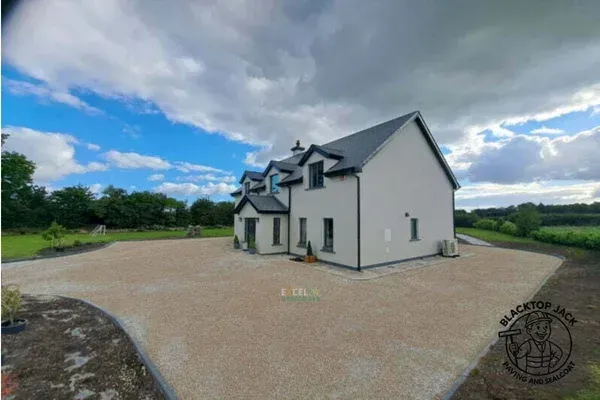
Tar and chip, sometimes called chip seal, is created by spraying a layer of hot asphalt binder onto a prepared base and then pressing small stones into it while it's still warm. The result is a textured, somewhat rustic surface that reads very differently from a smooth, uniform driveway.
This material tends to suit Chester County's more rural and historic properties particularly well. If your home has a farmhouse aesthetic, sits on a wooded lot, or has a long driveway where a smooth black surface might feel visually heavy against the landscape, tar and chip often blends in more naturally. It also tends to be a more budget-friendly option for longer driveways, since the installation process is generally faster and requires less curing time before use.
The tradeoff is ongoing upkeep. Loose stones can shift over time, particularly in areas that see regular snow plowing, and homeowners typically need to replenish stone in high-wear areas periodically to keep the surface looking full and even.
What Traditional Asphalt Brings to a Chester County Property
Traditional asphalt is the smooth, uniform black surface most people picture by default. It's built by compacting a mix of aggregate and asphalt binder under heat, creating a dense, solid surface that reads as clean and classic, especially in more suburban parts of the county where uniform driveways are the norm.
Asphalt tends to be the more straightforward choice for snow removal, since a smooth surface is far more plow-friendly than one with loose embedded stone. It also generally offers a longer expected lifespan when properly maintained, often reaching 20 to 25 years with consistent care, compared to tar and chip's typical 12-to-18-year range.
The tradeoff here shows up in maintenance requirements. Asphalt needs regular sealcoating, ideally every two to three years, to protect against UV oxidation and water infiltration. Skip that maintenance for too many years, and asphalt can actually deteriorate faster than a reasonably well-kept tar and chip surface, which somewhat evens out the durability gap between the two materials if care is neglected.
Matching the Material to Your Specific Property
Rather than defaulting to whatever's popular in your immediate neighborhood, it helps to think through a few honest questions about your own situation.
If your property has a rural or wooded character, a longer driveway, and you're comfortable with occasional stone touch-ups as part of routine care, tar and chip is worth serious consideration. It tends to fit naturally into that kind of setting and can offer meaningful upfront cost savings on longer installations.
If you're in a more suburban section of Chester County where smooth asphalt is the visual norm, or you want the most straightforward snow-plowing experience, traditional asphalt is likely the better fit. It also makes sense if you're planning to sell within a decade or two, since smooth asphalt tends to align more closely with typical buyer expectations in suburban markets.
Your willingness to commit to ongoing care matters just as much as the material itself. Both options can last well beyond their expected lifespan with consistent attention, and both can fail early if neglected. The material you choose should match not just your property's aesthetic, but your realistic appetite for maintenance.
What Long-Term Care Actually Looks Like
Whichever material you choose, going in with realistic maintenance expectations prevents disappointment down the road.
For tar and chip, care mainly involves periodically checking for loose or displaced stone, especially after winter plowing, and addressing thin or bare patches before they expand. Edge areas deserve particular attention, since the loose aggregate nature of the surface makes edges somewhat more prone to gradual erosion over time.
For asphalt, the maintenance rhythm is more structured and predictable: sealcoating on a consistent two-to-three-year cycle, prompt crack sealing whenever hairline cracks appear, and keeping the surface free of oil and chemical spills that can break down the binder. This kind of routine care is really the deciding factor in whether an asphalt driveway comfortably reaches its full 20-plus year lifespan or starts showing serious wear well ahead of schedule.
Either way, the underlying principle holds: a driveway's actual lifespan is shaped far more by consistent maintenance than by which material you originally chose. A well-cared-for tar and chip driveway can easily outperform a neglected asphalt one, and the reverse is just as true.
Working With a Local PA Driveway Contractor
Once you've got a sense of which material fits your property, the next step is finding a PA driveway contractor with genuine local experience installing both materials, since the installation process, base preparation, and appropriate thickness differ meaningfully between the two.
Ask specifically about their experience with both tar and chip and traditional asphalt in this region, and don't hesitate to ask for references from past projects that are at least a couple of years old, so you can see how the work has actually held up through a few Chester County seasons rather than just how it looked the day it was finished.
If you're also searching for asphalt driveway installation near me and want to compare pricing and process across a few local providers, prioritize contractors who walk you through base preparation and drainage planning in detail, since these are the factors that most significantly affect how long either material actually lasts.
If you're still weighing your options more broadly, including how these materials stack up against concrete as a third alternative, our detailed comparison on asphalt vs. concrete driveways covers cost, durability, and drainage performance across all three options, which can help round out your decision before committing to a direction.
Frequently Asked Questions
Is tar and chip cheaper than asphalt in Chester County? Generally, yes, particularly for a longer tar and chip driveway, since installation tends to be faster and requires less material preparation. However, exact pricing depends on your specific property, driveway length, and site conditions.
Which material handles Chester County winters better? Both handle winter reasonably well when properly maintained, but they respond differently. Asphalt's smooth surface is more plow-friendly and sheds water more predictably, while tar and chip's textured surface can occasionally trap moisture around loose stones in colder, wetter conditions.
Can I switch from tar and chip to asphalt later, or vice versa? Yes, though it typically requires removing the existing surface and rebuilding the base appropriately for the new material, rather than simply paving over the old surface.
How long does each material typically last in this region? Tar and chip generally lasts 12 to 18 years with reasonable care, while properly maintained asphalt often reaches 20 to 25 years. Both ranges depend heavily on how consistently they're maintained.
Does one material affect home resale value more than the other? In suburban Chester County neighborhoods where smooth asphalt is standard, tar and chip can occasionally look out of place to buyers. In more rural or higher-end rustic properties, the opposite can be true, with tar and chip enhancing curb appeal instead.
What questions should I ask a contractor before choosing between the two? Ask about their specific experience installing both materials locally, what base preparation they recommend for your property, expected timeline, and how they handle drainage planning, since these factors matter more than the material choice itself in determining how long your driveway lasts.
Bringing It All Together
There's no universally correct choice between tar and chip and traditional asphalt for Chester County homeowners. Both can serve a property beautifully for decades when they're matched to the right setting and paired with consistent care. The mistake to avoid isn't picking the "wrong" material, it's picking one without understanding the maintenance commitment that comes with it, then feeling blindsided years later when the driveway doesn't perform the way expected.
Clear takeaway: Choose based on your property's character, your realistic willingness to keep up with ongoing pavement maintenance, and your long-term plans for the home, not simply what happens to be common in your immediate neighborhood. Either material can serve you well for decades with the right care behind it.