So is your Washington, NJ Driveway ready for sealcoat? Here’s How to Tell
Informative takeaway: Sealcoating can help protect a structurally sound asphalt driveway from weather, moisture, sunlight, and everyday wear, but it is not the right solution for every pavement problem. Knowing when your driveway is ready is an important part of smart pavement maintenance.
Sealcoating Your Washington, NJ Driveway?
Your driveway may look like it needs attention, but figuring out what kind of attention it needs can be difficult. Maybe the asphalt has started turning gray. Perhaps you have noticed a few cracks near the edges or small areas that look worn after another New Jersey winter.
Then comes the question: Should you sealcoat it now, repair it first, or consider something more extensive?
Many homeowners make the mistake of treating sealcoating as a universal fix. They see an aging driveway and assume a fresh black coating will solve everything. But sealcoating works best when it is applied to asphalt that is already in reasonably good structural condition.
If the pavement underneath is failing, sealcoating cannot rebuild it.
That is why understanding the condition of your driveway should come before scheduling driveway sealcoating Washington NJ services.
What Does Sealcoating Actually Do?
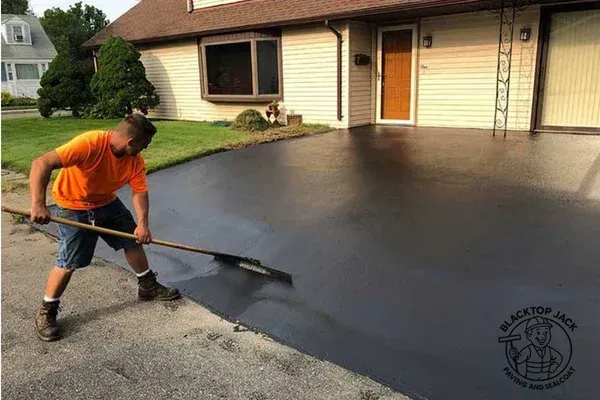
Sealcoating is a protective treatment applied over an existing asphalt surface. Its purpose is to provide an additional layer of protection against common sources of surface deterioration.
Your driveway is exposed to sunlight, rain, snow, ice, temperature changes, vehicle traffic, and sometimes oil or other automotive fluids.
Over time, these factors can affect the asphalt surface.
A properly maintained sealcoated surface can help protect against some of this everyday exposure while also giving an older driveway a darker, more uniform appearance.
However, sealcoating should be considered part of a broader pavement maintenance plan not a replacement for proper repairs.
First Question: Is Your Asphalt Structurally Sound?
This is the most crucial question to address before being seal-coated.
Walk across your driveway and inspect the entire surface. Look for signs that the asphalt itself is still stable.
A driveway may be a good candidate for sealcoating if:
The surface is generally solid
Cracks are limited and manageable
There are no major areas of sinking
Potholes are absent or have been properly repaired
The asphalt is not breaking apart across large sections
Drainage is generally working properly
On the other hand, widespread structural cracking, major potholes, sinking pavement, and severe deterioration may require repairs or more extensive paving work first.
Sealcoating a failing surface without addressing those problems is unlikely to provide the result a homeowner expects.
Is Your Driveway Faded or Turning Gray?
One of the easiest signs of aging asphalt is a change in color.
Fresh asphalt typically has a deep, dark appearance. As the surface ages and is exposed to sunlight and weather, it can gradually become lighter and gray.
Fading by itself does not necessarily mean your driveway is failing.
In fact, if the pavement remains structurally sound, this may be one of the situations where sealcoating makes sense.
The important distinction is between surface aging and structural damage.
A faded driveway with minor wear may benefit from protective maintenance. A faded driveway covered with deep cracks and potholes needs a closer evaluation before any coating is applied.
What About Cracks?
Cracks should be evaluated before sealcoating.
Small cracks can often be addressed as part of routine pavement maintenance, but larger or widespread cracks may indicate more significant deterioration.
Water is one of the main reasons cracks should not be ignored.
Once water enters pavement through cracks, seasonal temperature changes can contribute to further deterioration. Freeze-thaw conditions can be particularly hard on asphalt because water expands when it freezes.
For that reason, cracks should generally be repaired appropriately before sealcoating.
Think of it this way:
Sealcoating protects the surface. Crack repair addresses openings in the surface.
They can work together, but they are not the same service.
Use This Quick Sealcoating Checklist
What You See | Is Sealcoating Appropriate? | What to Consider |
|---|---|---|
Faded but solid asphalt | Usually worth considering | Good maintenance candidate |
Minor cracks | Potentially | Repair cracks first |
Several potholes | Not by itself | Address pavement damage |
Deep alligator cracking | Usually not | Professional evaluation needed |
Standing water | Not until addressed | Investigate drainage |
Sinking pavement | Usually not | Possible base problem |
Light surface wear | Potentially | Good candidate for maintenance |
Widespread pavement failure | No | May require reconstruction or paving |
This checklist is only a starting point. The actual condition of the pavement should determine the appropriate approach.
Washington, NJ Weather Makes Maintenance Important
Local weather conditions are another reason homeowners should think about pavement maintenance before problems become severe.
Washington, NJ driveways experience seasonal changes that can put stress on asphalt. Snow, ice, rain, summer heat, and repeated freezing and thawing can gradually affect pavement.
That does not mean every driveway needs annual sealcoating.
Instead, homeowners should pay attention to how the pavement changes over time.
If cracks are spreading, potholes are forming, or drainage is becoming worse, those issues deserve attention before simply applying a protective coating.
Good pavement maintenance is about timing the right treatment—not automatically performing the same service every year.
What are the signs that indicate it's time to sealcoat your driveway in Washington NJ?
The right timing depends on the condition of your asphalt, previous maintenance, weather exposure, and the amount of traffic your driveway receives.
A driveway that receives regular passenger-vehicle traffic may experience different wear than one frequently used by heavy trucks, trailers, or commercial vehicles.
Before scheduling driveway sealcoating Washington NJ, consider these questions:
When was the driveway last maintained?
Has the asphalt started fading significantly?
Are cracks appearing?
Have potholes developed?
Does water drain properly?
Is the pavement still level and stable?
Have previous repairs been successful?
Answering these questions can help you determine whether your driveway is actually ready for sealcoating.
What If Repairs Are Needed First?
Sometimes the best sealcoating project starts with repair work.
For example, a driveway may have a generally healthy asphalt surface but contain several cracks or a few isolated damaged areas. In that situation, those problems may need to be addressed before applying a protective coating.
This approach makes more sense than simply covering visible problems.
If you are unsure whether your driveway needs maintenance or more extensive work, Blacktop Jack's guide on paving and sealcoating near me can help explain how these services fit into a broader asphalt care strategy.
What About Asphalt Sealcoating Washington NJ for Commercial Properties?
Homeowners are not the only property owners who need to think about pavement protection.
Businesses also depend on well-maintained parking lots, driveways, entrances, and access areas.
Commercial paving and sealcoating may be appropriate depending on the condition and traffic demands of the property.
Commercial pavement can experience additional stress from:
Delivery trucks
Customer traffic
Employee vehicles
Heavy equipment
Frequent turning
Large parking areas
For businesses, pavement maintenance is not only about appearance. Cracks and potholes can affect how customers access the property and how employees and deliveries move through the site.
Regular inspections can help business owners identify deterioration before it becomes a larger project.
Searching for “Paving and Sealcoating Near Me”?
If you are searching for paving and sealcoating near me, do not assume that the first service you need is sealcoating.
Instead, look for a contractor who can evaluate the condition of your pavement and explain the available options.
A good assessment should help answer:
Does the pavement need cleaning and preparation?
Should cracks be repaired first?
Are there drainage problems?
Is the asphalt structurally sound?
Would sealcoating provide a useful protective benefit?
Does the pavement require more extensive repair or paving?
The answers matter because applying sealcoating to pavement that needs structural work can delay the real solution.
CTA: Is Your Driveway Ready for Sealcoating?
If your Washington, NJ driveway looks faded, weathered, or worn, you do not have to guess whether sealcoating is the right next step.
Blacktop Jack can help you understand the condition of your asphalt and determine whether your property may benefit from sealcoating, repairs, pavement maintenance, or paving.
Before spending money on a treatment that may not match your pavement's needs, get a professional opinion.
Contact Blacktop Jack today for a free quote and find out whether your driveway is ready for sealcoating.
Clear Takeaway
Sealcoating can be a valuable part of long-term pavement maintenance, but it works best when the underlying asphalt is structurally sound.
If your Washington, NJ driveway is mainly faded and showing normal surface wear, sealcoating may be a practical way to protect the pavement and improve its appearance. If you are dealing with deep cracks, potholes, drainage problems, sinking areas, or widespread deterioration, those issues should be evaluated first.
The smartest approach is simple: inspect the pavement, address existing problems, and then determine whether sealcoating is appropriate.
Taking that approach can help Washington, NJ homeowners protect their asphalt investment instead of waiting until manageable pavement problems become expensive repairs.