How Long Should an Asphalt Driveway Last in Warren County, NJ?
How Long Should an Asphalt Driveway Last in Warren County, NJ?
A well-built asphalt driveway can often last around 15 to 25 years, but proper pavement maintenance, drainage, installation quality, traffic, and Warren County’s changing weather conditions can make a major difference in how long it actually performs.
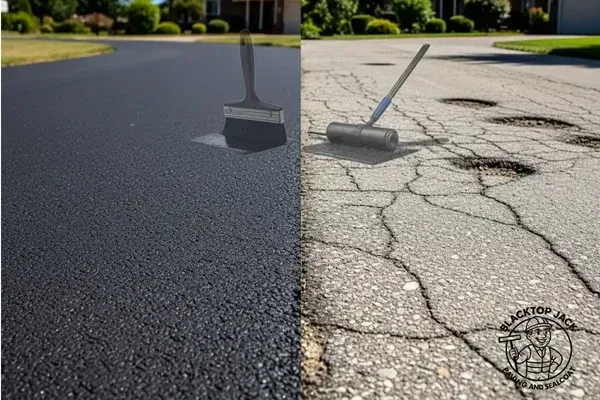
If your driveway is beginning to crack, fade, develop small potholes, or look uneven, you may be wondering whether it simply needs maintenance or whether its useful life is coming to an end. This is a common concern for homeowners in Warren County, NJ, especially because asphalt has to deal with hot summers, heavy rain, freezing temperatures, snow, ice, and repeated freeze-thaw cycles.
The frustrating part is that there is no single expiration date for an asphalt driveway. Two driveways installed around the same time can have completely different lifespans. One may remain smooth and functional for decades, while another may develop serious problems much sooner.
So, how long does an asphalt driveway last in Warren County?
The answer depends on what happens beneath and above the pavement throughout its life.
So what makes asphalt driveways last?
An asphalt driveway is more than the black surface you see from the street. Underneath it is a base designed to support vehicles and distribute weight.
If the underlying base is properly prepared, compacted, and drained, the asphalt has a much better chance of lasting. If the foundation is weak or water continually reaches the base, even a new driveway can develop problems earlier than expected.
Several factors influence the lifespan of an asphalt driveway, including:
Quality of the original installation
Thickness of the asphalt
Strength and preparation of the base
Drainage conditions
Amount of vehicle traffic
Exposure to sunlight and moisture
Winter freeze-thaw cycles
Timely crack repair
Sealcoating and other maintenance
Age of the pavement
This is why simply asking how many years asphalt lasts does not tell the whole story.
Warren County Weather Can Affect Asphalt Longevity
Warren County experiences four distinct seasons, and each one can affect pavement differently.
Winter is particularly challenging because moisture can enter cracks and freeze. When water freezes it expands, putting pressure on the surrounding pavement. When temperatures rise, the ice melts and leaves space for more water to enter.
Repeated freeze-thaw cycles can gradually widen cracks and contribute to potholes and surface deterioration.
Summer brings a different type of stress. Heat and sunlight can accelerate surface aging, while vehicle traffic places additional pressure on asphalt that may already be weakened.
Heavy rain can also become a problem when drainage is poor. Water that repeatedly collects on or around the driveway can eventually contribute to deterioration.
This makes year-round pavement maintenance more important than waiting until a major repair becomes unavoidable.
A Typical Asphalt Driveway Lifespan
There is no guaranteed lifespan, but the following ranges can help homeowners understand how pavement condition generally changes over time.
Asphalt Driveway Age | Typical Condition | What Homeowners Should Consider |
|---|---|---|
0–5 years | New to lightly aged | Routine inspections and drainage monitoring |
5–10 years | Generally good with normal wear | Preventive maintenance and crack attention |
10–15 years | More visible aging may appear | Regular repairs and protective maintenance |
15–20 years | Increased cracking and surface wear possible | Professional evaluation becomes more valuable |
20–25+ years | May show significant deterioration | Repair, resurfacing, or replacement may be considered |
These are general guidelines, not guarantees. A properly installed and consistently maintained driveway may perform beyond these ranges, while a poorly constructed or heavily neglected driveway may deteriorate much sooner.
Why Pavement Maintenance Can Extend Driveway Life
Homeowners often think of maintenance as something they do only when the driveway already has a problem.
That approach can be expensive.
The purpose of pavement maintenance is to identify and address vulnerabilities before they become larger pavement failures.
For example, a small crack may not seem important today. But if rainwater enters that crack and winter temperatures arrive, the opening can become larger. Once the supporting layers are affected, the repair may become considerably more involved.
Regular maintenance may include:
Monitoring cracks
Repairing suitable cracks before winter
Addressing potholes
Maintaining drainage
Removing debris that holds moisture
Considering sealcoating when appropriate
Inspecting pavement after harsh weather
Evaluating larger areas of deterioration
Maintenance cannot stop asphalt from aging forever. However, it can help slow avoidable deterioration and give property owners a better understanding of when repairs are needed.
Sealcoating and Asphalt Longevity
Sealcoating is often discussed when homeowners want to protect an aging asphalt driveway.
A quality sealcoating application can provide a protective surface layer and improve the appearance of asphalt. It can help limit exposure to elements such as moisture and sunlight, but it should be viewed as one part of an overall maintenance strategy.
Sealcoating does not rebuild a failed base, eliminate major structural cracks, or repair a severely deteriorated driveway.
Before choosing sealcoating, it is important to understand the condition of the existing asphalt.
For homeowners considering this type of maintenance, Blacktop Jack's Warren County driveway sealcoating guide provides additional information about what property owners should consider.
Signs Your Asphalt Driveway May Be Aging
Age alone does not tell you when a driveway needs to be replaced.
Instead, pay attention to the condition of the pavement.
Some common warning signs include:
1. Widespread Cracking
A few small cracks can often be manageable, but extensive cracking across multiple sections may indicate that the pavement is aging or experiencing structural problems.
2. Potholes
Potholes are often associated with moisture, freeze-thaw cycles, traffic, and pavement deterioration. Repeated potholes in the same area may also point to an underlying drainage or base problem.
3. Uneven or Settled Areas
Depressions can allow water to collect. If settlement continues, the problem may involve the supporting layers underneath the asphalt.
4. Crumbling Edges
Driveway edges can be vulnerable to water and traffic. Crumbling edges should be addressed before deterioration spreads farther into the pavement.
5. Extensive Fading and Surface Wear
Fading does not necessarily mean the driveway needs replacement. However, when fading occurs alongside cracking, raveling, potholes, or other damage, it may be a sign that the pavement is reaching an advanced stage of aging.
When Should You Repair an Asphalt Driveway?
Not every damaged driveway needs to be completely replaced.
The right solution depends on the extent and cause of the damage.
For example, limited cracking may call for crack repair. A few isolated potholes may be repaired without replacing the entire driveway. A surface that is aging but still structurally sound may have different options from a driveway with widespread base failure.
The key is to avoid treating every asphalt problem the same way.
A professional evaluation can help determine whether the pavement needs maintenance, repairs, resurfacing, or a complete replacement.
When Does an Asphalt Driveway Need Replacement?
Replacement may become more appropriate when deterioration is widespread and the underlying structure can no longer adequately support the pavement.
Some signs that a driveway may be approaching the end of its useful life include:
Extensive interconnected cracking
Numerous recurring potholes
Significant sinking or settlement
Major drainage problems
Severe surface deterioration
Large areas of structural failure
Repeated repairs that do not last
A very old pavement surface with widespread deterioration
A driveway that is 20 years old is not automatically a candidate for replacement. Likewise, a 10-year-old driveway is not automatically in good condition.
The condition of the pavement matters more than the number on the calendar.
How Traffic Affects Driveway Lifespan
Residential driveways usually experience less traffic than commercial parking areas, but vehicle weight still matters.
Regular passenger vehicles generally place less stress on asphalt than heavy trucks, trailers, delivery vehicles, or commercial equipment.
If heavier vehicles frequently use the driveway, the pavement may experience additional stress, particularly if the base was not designed for that type of loading.
For businesses and larger properties, professional commercial paving and sealcoating can become an important part of protecting paved areas that experience significantly more traffic.
Businesses searching for asphalt paving and sealcoating should consider both immediate pavement needs and the long-term condition of the property.
What About Searching for “Paving and Sealcoating Near Me”?
When homeowners search for paving and sealcoating near me, they are often looking for a quick answer to an obvious pavement problem.
But choosing the right service should begin with identifying the actual condition of the asphalt.
A driveway with minor surface wear may need a very different solution from one with extensive structural damage.
Before committing to a particular service, consider:
How old is the driveway?
Are cracks isolated or widespread?
Does water collect anywhere?
Are potholes recurring?
Is the pavement sinking?
Has the driveway received maintenance in the past?
Are repairs lasting or failing repeatedly?
These questions can help you understand whether preventive maintenance or a larger paving project makes more sense.
A Simple Maintenance Timeline for Warren County Homeowners
A seasonal approach can make pavement care easier.
Spring
Inspect the driveway after winter. Look for new cracks, potholes, edge damage, and areas where water may have collected.
Summer
Monitor surface wear and drainage. This is also a useful time to evaluate whether protective maintenance is appropriate.
Fall
Address suitable cracks and pavement problems before freezing temperatures arrive. Clearing leaves and debris can also help prevent moisture from remaining against vulnerable areas.
Winter
Avoid ignoring major potholes or drainage issues. While winter conditions may make some repairs difficult, documenting problems can help you plan maintenance when conditions improve.
How to Get More Life From Your Asphalt Driveway
There is no maintenance routine that can make asphalt last forever. Eventually, every driveway reaches a point where repairs or replacement become necessary.
However, homeowners can take several practical steps to improve the chances of getting a longer service life:
Start with proper installation.
Pay attention to drainage.
Inspect the pavement regularly.
Address cracks before they become widespread.
Repair potholes rather than leaving them untreated.
Consider sealcoating when the pavement is suitable.
Avoid unnecessary heavy vehicle traffic.
Inspect the driveway after severe weather.
Do not cover serious structural problems with cosmetic treatments.
Have aging pavement professionally evaluated.
The goal is not simply to make asphalt look good. The goal is to protect the pavement's structure and address problems while they are still manageable.
Blacktop Jack Can Help You Understand Your Options
If your Warren County driveway is showing signs of age, you do not necessarily need to assume that complete replacement is your only option.
Blacktop Jack can help property owners understand the condition of their pavement and determine what type of service may be appropriate.
Whether you are considering maintenance, sealcoating, repairs, or new paving, getting professional guidance can help you avoid spending money on the wrong solution.
If you have been searching for Superior sealcoating and paving, paving and sealcoating near me, or reliable asphalt services in Warren County, NJ, the best time to evaluate your driveway is before a small problem becomes a major one.
Get Ahead of Driveway Deterioration
Your driveway does not suddenly fail overnight. In most cases, deterioration develops gradually through years of weather exposure, water infiltration, traffic, and deferred maintenance.
If you are noticing cracks, potholes, drainage problems, crumbling edges, or widespread surface wear, do not wait until the damage becomes difficult to manage.
Contact Blacktop Jack for a professional evaluation and a free quote. Understanding your driveway's current condition can help you make a smarter decision about maintenance, repair, or paving before the next harsh season puts additional stress on the pavement.
The Clear Takeaway
So, how long does an asphalt driveway last? In many cases, homeowners can expect roughly 15 to 25 years from a properly installed and maintained driveway, but the actual lifespan depends heavily on construction quality, drainage, traffic, weather, and ongoing care.
For Warren County homeowners, seasonal weather makes pavement maintenance especially important. Freezing temperatures, moisture, snow, heat, and repeated freeze-thaw cycles can gradually turn small weaknesses into expensive pavement problems.
The smartest approach is not to wait for your driveway to fail. Inspect it regularly, address cracks and drainage issues early, maintain the surface when appropriate, and get professional advice when deterioration becomes more extensive.
A longer-lasting asphalt driveway starts with good construction but protecting that investment over the years comes down to recognizing problems early and maintaining the pavement before those problems grow.