asphalt pavement maintenance
How Regrading Fixes Drainage Problems Before They Wreck Your Driveway
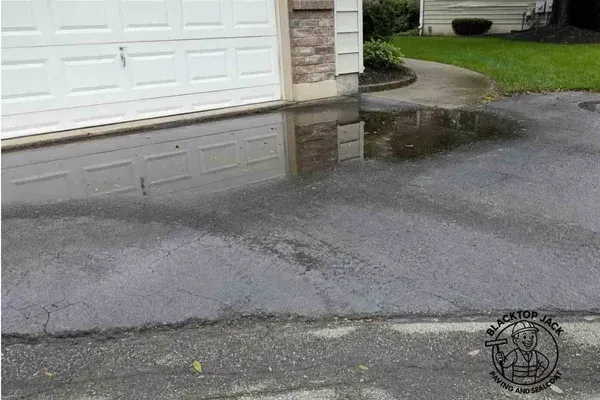
Standing water on a driveway for just 24 to 48 hours can weaken the base layer enough to cause visible sinking within a single season, yet most homeowners treat a puddle that keeps reappearing after every rainstorm as a minor annoyance rather than the early warning sign it actually is a gap in understanding pavement maintenance that plays out in driveway after driveway we're called out to fix.
If you've got a spot on your driveway where water always seems to pool, you've probably already tried the obvious things. Maybe you've swept it, hosed it off, or just started avoiding that section entirely. What you probably haven't done is asked why that water is collecting there in the first place, because on the surface, it doesn't look like a big deal. It's just water. It'll evaporate eventually. The driveway still looks fine.
Here's the problem with that thinking: standing water isn't a cosmetic issue, it's a structural one in slow motion. Every time water sits on your driveway instead of running off, it's working its way into the surface and the base layer underneath, weakening the exact structure that holds your driveway up. This is one of the most common and most preventable causes of premature driveway failure, and it almost always traces back to one root issue improper grading.
Let's walk through exactly why drainage problems develop, why they're more serious than they look, and how regrading solves the problem at its source rather than just treating the symptoms as part of a bigger pavement maintenance strategy.
Why Water Pooling Is a Bigger Problem Than It Looks
Asphalt driveways are engineered to shed water, not absorb it. A properly graded driveway has a slight, consistent slope that directs rainwater toward the street, a drain, or a designated runoff area. When that slope is off, even slightly, water stops moving the way it's supposed to and starts collecting in low spots instead.
Once water is sitting on the surface, a few things start happening simultaneously. It begins seeping into any existing cracks, no matter how small. It softens the ground beneath the pavement in the areas where it's pooling. And in colder climates, it sets up the perfect conditions for freeze-thaw damage, since standing water that freezes expands and puts direct pressure on the surrounding pavement.
This is exactly why fixing driveway drainage problems early matters so much. A puddle that seems harmless today is often the first visible sign that water is already doing damage you can't see yet, underneath the surface.
What Actually Causes Poor Driveway Drainage
Drainage problems don't usually appear overnight. They tend to develop gradually, through a combination of the following factors.
Improper initial grading. Sometimes a driveway is installed without quite enough slope to begin with, especially if the surrounding landscape has tight constraints. Even a difference of an inch or two in slope across a long driveway can be enough to create a low spot where water collects.
Ground settling over time. The soil underneath a driveway naturally settles over the years, and it doesn't always settle evenly. Even a perfectly graded area can become slightly depressed over the years due to natural ground movement.
Nearby landscaping changes. Added mulch beds, new plantings, or regrading elsewhere on the property can inadvertently redirect water toward your driveway instead of away from it, even if the driveway itself hasn't changed at all.
Clogged or missing drainage points. If your driveway relies on a drain or channel to carry water away, debris buildup or a poorly placed drain can cause water to back up and pool nearby instead of draining properly.
Repeated heavy vehicle traffic. Consistent weight in the same spot, especially from heavier vehicles, can gradually compress the base layer in localized areas, creating shallow depressions that collect water over time.
Why "Just Filling It In" Doesn't Actually Work
A common instinct when a low spot develops is to simply patch or fill it, treating the pooling as a surface-level cosmetic problem. The issue is that this approach addresses the symptom without touching the underlying cause. Fixing driveway drainage problems properly means correcting the slope itself if the grading hasn't been corrected, water will simply find the next lowest point and start the same cycle over again, often just a few feet away from where the original patch was applied.
This is the core difference between a quick fix and actual regrading. Regrading corrects the slope of the driveway and the surrounding area so water has a clear, consistent path away from the surface entirely, rather than trying to patch over individual low spots as they appear one after another.
How Regrading Actually Works
Regrading involves reshaping the base and surface of a driveway to reestablish proper water flow. Depending on the severity of the issue, this can range from a targeted adjustment in one problem area to a more comprehensive reworking of the driveway's overall slope.
Assessment first. A professional evaluation identifies exactly where water is collecting, how significant the slope problem is, and whether it's isolated to one section or affects the driveway more broadly.
Base adjustment. In many cases, the existing surface needs to be removed in the affected area so the base material underneath can be reshaped and properly compacted with the correct slope before new asphalt is applied.
Surface restoration. Once the base is corrected, new asphalt is applied and compacted to match the corrected grade, blending smoothly with the surrounding driveway rather than leaving an obvious patch.
Drainage path verification. A good regrading job doesn't just fix the low spot it confirms that water now has a clear, functional path away from the driveway entirely, whether that's toward the street, a drain, or a designated runoff area.
Signs You Likely Need Regrading, Not Just Repair
Sign | What It Usually Means | Recommended Action |
|---|---|---|
Water pools in the same spot after every rain | Localized low spot from settling or grading issue | Targeted regrading of that section |
Multiple low spots across the driveway | Broader slope issue, possibly from original installation | Comprehensive regrading assessment |
Water flows toward your garage or home | Slope is directing water the wrong direction | Regrading is a priority, not optional |
Cracks consistently appear near pooling areas | Water infiltration is actively weakening the base | Regrading combined with asphalt driveway maintenance |
Soft or spongy spots near standing water | Base has already been compromised by trapped moisture | Regrading plus possible base repair |
Repeated patch repairs in the same area | Symptom-only fixes without addressing slope | Full regrading to solve root cause |
If you're seeing more than one of these signs, it's a strong indicator that a simple patch isn't going to solve the underlying problem, no matter how many times it's reapplied.
The Cost of Ignoring Drainage Problems
Here's where the financial argument for addressing drainage early becomes clear. A drainage issue caught and corrected early is a moderate, one-time investment. Left untreated, it compounds in a very predictable way.
Stage | What's Happening | Relative Cost to Address |
|---|---|---|
Minor pooling noticed | Slight low spot, no visible surface damage yet | Low — early regrading |
Repeated pooling over multiple seasons | Water infiltration beginning; hairline cracks may appear | Low–Moderate |
Cracking develops near pooling area | Base weakening underway | Moderate — regrading plus crack sealing |
Soft spots or minor sinking appear | Base has been compromised | Moderate–High — regrading plus base repair |
Section collapse or significant sinking | Structural failure in the affected area | High — full section reconstruction |
The pattern is consistent with nearly every other form of neglected pavement damage: the earlier you act, the smaller and cheaper the fix. Drainage issues are particularly worth catching early because, unlike a simple crack, they tend to actively create new problems the longer they're left alone.
Regrading as Part of a Bigger Picture
It's worth understanding that regrading isn't a replacement for routine driveway maintenance it's a complement to it. A properly graded driveway still benefits from regular sealcoating, prompt crack sealing, and general upkeep as part of ongoing driveway maintenance. What regrading does is remove one of the most damaging root causes that routine maintenance alone can't fix, since no amount of sealcoating will correct an underlying slope problem that's actively funneling water into the same spot every time it rains.
This distinction matters when you're deciding what your driveway actually needs. If you've been diligent about asphalt driveway maintenance sealcoating on schedule, sealing cracks promptly but you're still seeing recurring pooling or new cracks in the same location every year, drainage is very likely the missing piece, not a maintenance gap.
What to Consider If You're Weighing a Full Replacement
Sometimes persistent drainage issues are severe enough that a homeowner starts wondering whether it's worth fixing the existing driveway at all, or whether a full replacement makes more sense. This is a bigger decision than it might seem, and it often comes down to more than just the drainage problem itself material choice, budget, and long-term plans for the property all factor in.
If you're at that stage of decision-making, it's worth understanding how different driveway materials handle drainage and long-term durability before committing to a direction. Our detailed comparison on asphalt vs. concrete driveways breaks down how each material performs when it comes to water management, cost, and lifespan, which can help clarify whether a full replacement or a targeted regrading fix is the smarter path for your specific situation.
Bringing It All Together
Standing water on a driveway is never just a cosmetic inconvenience it's a sign that water isn't moving the way it's supposed to, and every day it sits there, it's working against the structure underneath. Regrading solves this at the source, correcting the slope so water has a clear path away from your driveway instead of pooling and slowly causing damage. Pairing that fix with consistent pavement maintenance afterward is what keeps the problem from ever coming back.
Clear takeaway: If water keeps pooling in the same spot on your driveway, the issue isn't going to fix itself, and patching alone won't solve it either. Regrading addresses the root cause, and it's almost always cheaper to fix now than to deal with the structural damage that follows if it's ignored.
Ready to Solve Your Drainage Problem for Good?
If water is pooling on your driveway after every rain, don't wait for it to turn into cracking, soft spots, or sinking. Blacktop Jack provides honest assessments that identify whether you're dealing with a simple grading fix or a more involved drainage issue, along with a clear, straightforward plan to solve it.
Schedule your free drainage assessment today and find out exactly what's causing that recurring puddle, and the most cost-effective way to fix it permanently.