The Real Cost of Delaying Asphalt Repairs
Introduction:
A crack in asphalt widens roughly 10 times faster once water gets inside it, which means the pothole you're putting off fixing this month could easily be three times larger, and three times more expensive, by the time next season's freeze-thaw cycle finishes with it.
If you're reading this, there's a good chance you've got a crack, a soft spot, or an early pothole somewhere on your property that you've been meaning to deal with. Maybe you got a quote and the number made you wince, so you decided it could wait until next quarter's budget, or next year, or "whenever it gets worse." It's an understandable instinct. Nobody wants to spend money on something that still technically works.
But asphalt doesn't operate on your timeline. It doesn't pause deterioration while you wait for a more convenient budget cycle. Every month a crack sits untreated, it's quietly getting worse underneath the surface, even if it doesn't look dramatically different from the outside. This is exactly why so many property owners end up shocked when a "small crack" quote from last year turns into a full-section replacement quote this year.
Let's walk through what's actually happening when repairs get delayed, what it costs in real numbers, and why acting early is almost always the financially smarter move even when it doesn't feel that way in the moment.
Why "It's Not That Bad Yet" Is a Costly Mindset
Asphalt damage doesn't progress in a straight line. It follows a compounding pattern, where each stage of neglect makes the next stage happen faster. Understanding this pattern is the key to understanding why delay is so expensive.
Stage one: the hairline crack. This is where nearly all pavement damage starts. It might be barely visible, a thin line no wider than a pencil mark. At this stage, repair is fast, cheap, and highly effective. A simple crack sealant, properly applied, can stop the problem in its tracks.
Stage two: water infiltration. Once a crack exists, rain and melting snow find their way in. If your climate sees freezing temperatures, that water expands as it freezes, physically prying the crack wider from the inside. This is why cracks that seem stable in summer often explode in size by the following spring.
Stage three: base weakening. Water that gets past the surface eventually reaches the base layer the compacted material underneath that gives asphalt its structural strength. Once the base is saturated and weakened, the pavement above it loses support, and normal vehicle weight starts causing visible sinking, rutting, or crumbling.
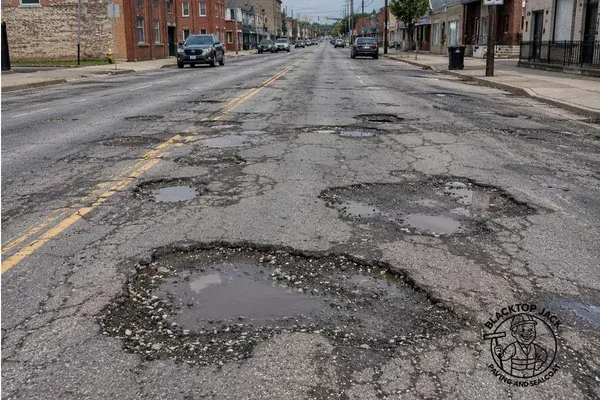
Stage four: structural failure. This is the pothole stage, or worse, sections of pavement that are crumbling, sunken, or entirely broken apart. At this point, surface repairs won't hold. The damage has to be excavated and rebuilt from the base up.
The frustrating truth is that stage one and stage four cost dramatically different amounts to fix, even though the underlying problem a crack that let water in started out identical in both cases.
What Delay Actually Costs: A Real Numbers Breakdown
Asphalt repair cost scales dramatically with how far damage has progressed. Here's a realistic comparison based on typical repair categories:
Damage Stage | What It Looks Like | Typical Repair | Relative Cost |
|---|---|---|---|
Hairline crack | Thin surface crack, no depth | Crack sealing | Low ($) |
Widening crack network | Multiple connected cracks, slight surface unevenness | Crack sealing + sealcoating | Low–Moderate ($$) |
Alligator cracking | Interconnected cracks resembling reptile skin | Patch repair | Moderate ($$$) |
Small pothole | Localized surface collapse | Full-depth patching | Moderate–High ($$$$) |
Large pothole / sunken area | Base failure, visible depression | Excavation and base rebuild | High ($$$$$) |
Widespread section failure | Multiple large potholes, crumbling edges | Section replacement or full resurfacing | Very High ($$$$$$) |
The pattern here isn't subtle. Each stage of delay doesn't just add a little to the cost it often multiplies it. A crack that would have cost a few hundred dollars to seal can turn into a repair costing ten to twenty times that once it reaches the pothole or base-failure stage.
The Hidden Costs Nobody Talks About
Direct repair costs are only part of the picture. Delaying asphalt pavement repair carries additional costs that don't show up on a contractor's invoice but absolutely affect your bottom line.
Liability exposure. A pothole in a parking lot or driveway isn't just an eyesore it's a legitimate trip-and-fall or vehicle damage risk. If someone gets injured or their car is damaged because of pavement you knew needed repair, the legal and insurance costs can dwarf what the repair itself would have cost.
Reduced property value and curb appeal. For commercial properties especially, a cracked and pothole-riddled parking lot sends a message to customers before they've even walked through the door. It signals neglect, and it can measurably affect foot traffic and perceived business quality.
Faster deterioration of surrounding pavement. Damage doesn't stay contained. A pothole near a parking lot entrance creates uneven stress patterns that accelerate cracking in adjacent areas, effectively spreading the problem outward the longer it's left alone.
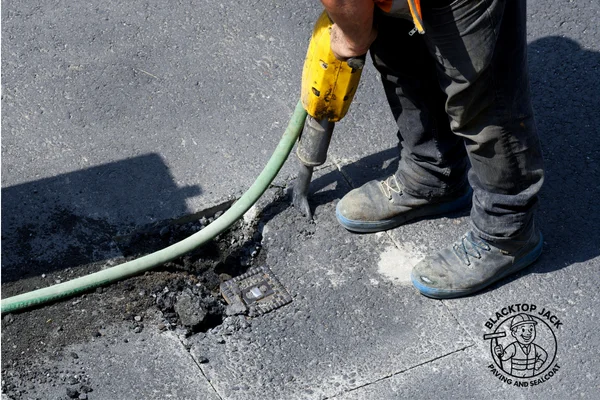
Emergency repair premiums. Contractors typically charge more for urgent, unplanned repairs than for scheduled maintenance work. Waiting until a pothole becomes a safety hazard often means paying rush pricing on top of the already-inflated repair cost.
Why Small, Regular Maintenance Beats Big, Rare Repairs
Here's the mindset shift that changes everything: pavement maintenance isn't really about avoiding money spent it's about controlling when and how much you spend. A property owner who invests in routine care spreads costs out predictably over time. A property owner who waits ends up facing large, unpredictable bills that often arrive at the worst possible moment.
Consider two driveways, identical at installation:
Driveway A gets crack sealing whenever hairline cracks appear, plus sealcoating every two to three years. Over 15 years, the owner spends a modest, predictable amount annually, and the driveway remains structurally sound the entire time.
Driveway B gets ignored until problems are visually obvious. Cracks widen, water gets in, and by year seven, sections need patching. By year eleven, base failure requires a partial rebuild. The owner spends less in the early years, but the year seven and year eleven bills are large enough that total spending over 15 years significantly exceeds Driveway A's while also dealing with a driveway that looked bad and functioned poorly for years in between.
The math consistently favors the proactive approach, even though it feels like you're "spending money on nothing" in the early years when everything still looks fine.
What to Do If You're Already Behind
If you're reading this because you already have visible damage, don't panic but also don't keep waiting. Here's a practical path forward:
1. Get an honest assessment now, not later. A professional can tell you whether you're dealing with a surface-level issue or something that's already reached the base. This determines your actual cost, and waiting longer only pushes you toward the more expensive end of that range.
2. Prioritize based on water exposure, not just visibility. Cracks in low spots where water pools should be addressed before cosmetic cracks in areas with good drainage, even if the pooling-area cracks look less severe right now.
3. Ask about combining repairs with protective sealcoating. Once damaged areas are patched, a sealcoat application protects the surrounding pavement from developing the same issues. This is often the most cost-effective way to handle asphalt driveway maintenance after a repair, since it addresses both the existing damage and future prevention in a single service.
4. Build a maintenance schedule going forward. A one-time repair without a follow-up plan just resets the clock until the next round of neglect-driven damage. Pairing repairs with a routine inspection and sealcoating schedule is what actually breaks the cycle.
For a deeper look at how repair and long-term protection work together as a single strategy rather than separate services, our guide on sealcoating and paving covers exactly how professionals sequence these steps for the best long-term results.
The Real Question to Ask Yourself
Next time you notice a crack and think "it's not that bad yet," the more useful question is: what will this cost if I wait another year? Given how predictably asphalt damage compounds, the honest answer is almost always higher than the cost of fixing it now. The comfort of delaying payment today rarely outweighs the much larger bill that shows up later, along with the liability risk, curb appeal damage, and rushed-repair premiums that come with it.
Clear takeaway: Every stage of delayed asphalt damage costs more to fix than the one before it. Pavement maintenance isn't an expense you're avoiding by waiting it's a bill you're postponing and inflating at the same time.
Don't Let a Small Crack Become a Big Bill
If you've got cracks, soft spots, or early pothole damage on your property, the most expensive thing you can do right now is nothing. At Blacktopjack, we provide honest, no-pressure assessments that tell you exactly what stage your pavement is at and what it will actually cost to fix it now versus later.
Get your free asphalt repair estimate today and find out how much you could save by acting before the next freeze-thaw cycle or rainy season does more damage.