Crack-Filling 101: The Cheapest Way to Protect Your Driveway
Introduction;
A single tube of crack filler costs less than a large pizza, yet that small, inexpensive fix can prevent a repair bill running into the thousands which makes crack filling one of the highest-value, most overlooked tools in effective pavement maintenance, and most homeowners have no idea it's sitting on a hardware store shelf right now.
If you've noticed a thin line running across your driveway and thought "I'll deal with that eventually," you're not alone. It's one of the most common reactions homeowners have to early pavement damage. The crack isn't stopping you from parking your car. It's not causing a visible problem yet. So it gets mentally filed under "someday" projects, right next to organizing the garage.
The trouble is that asphalt doesn't wait for "someday." Every season that crack sits open, it's letting water in, and water is what turns a cheap, five-minute fix into an expensive structural repair. This is the gap between what most people assume about driveway care and what actually determines whether a driveway lasts 20 years or falls apart in half that time.
Here's the good news: crack filling is genuinely one of the simplest, cheapest, and most effective things you can do for your driveway, and you don't need to be a paving expert to understand when and how to use it. Let's break down exactly why it matters, how it actually works, and when it's time to bring in a professional instead.
What a little crack can cause.
It's easy to dismiss a hairline crack as cosmetic. It's thin, it's barely visible from a few feet away, and the driveway still functions perfectly fine. But that crack is doing something you can't see: it's creating a direct pathway for water to reach the base layer underneath your asphalt.
Once water gets past the surface, it starts working against the structure that holds your entire driveway up. In colder climates, this becomes especially damaging, because water that seeps into a crack and then freezes expands by roughly 9%, physically prying the crack wider from the inside. That single freeze-thaw cycle can turn a barely-visible crack into something noticeably larger, and it repeats every time temperatures swing above and below freezing throughout the winter.
This is exactly why crack filling driveway maintenance is considered such high-leverage work. You're not just patching a cosmetic flaw you're cutting off the exact mechanism that turns minor surface damage into major structural failure.
What Crack Filling Actually Does
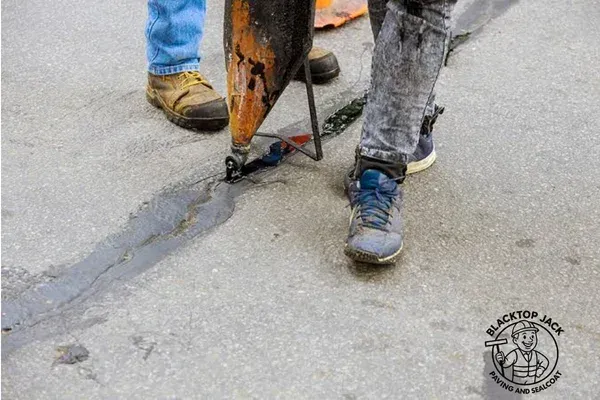
Crack filling involves applying a flexible sealant directly into a crack, creating a watertight barrier that prevents moisture from getting underneath the surface. Unlike a full resurfacing or patch job, it doesn't rebuild damaged asphalt it simply stops the crack from getting worse by blocking out the water that would otherwise cause it to expand.
The sealant used for crack filling is specifically designed to remain flexible even as temperatures change, which matters because asphalt naturally expands and contracts with heat and cold. A rigid filler would crack again almost immediately; a proper flexible sealant moves with the pavement instead of fighting against it.
This is also what separates simple crack filling from more involved asphalt crack repair work. Crack filling addresses surface-level cracks early, before they've caused deeper damage. Once a crack has widened significantly or connected with other cracks nearby, it usually requires more than a simple fill.
When Crack Filling Works And When It Doesn't
Not every crack is a candidate for a simple DIY fix. Understanding the difference helps you know when a $15 tube of sealant is enough, and when it's time to call in professional help.
Crack Type | Description | Best Fix |
|---|---|---|
Hairline crack | Thin, barely visible, no depth | Basic crack filler, DIY-friendly |
Single surface crack | Under 1/4 inch wide, isolated | Crack filling with a pour-in or squeeze sealant |
Multiple parallel cracks | Several thin cracks running close together | Crack filling each one individually, ideally same season |
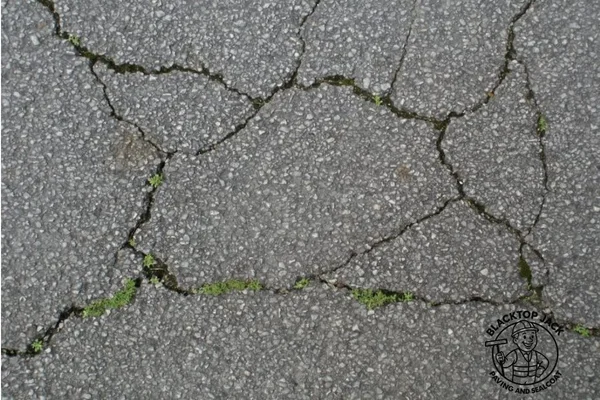
Spiderweb / alligator cracking | Interconnected network of cracks | Professional asphalt crack repair or patching, not simple filling |
Crack with visible edge lifting | Uneven surface on either side of the crack | Professional assessment; may indicate base issues |
Crack near a pothole or soft spot | Structural weakness underneath | Full repair needed, not crack filling |
The general rule: if you can trace the crack with a single finger and it's isolated, crack filling is likely sufficient. If the damage looks more like a network, or the surface feels uneven around it, it's time to bring in a professional rather than relying on a surface-level fix.
How to Fill a Crack the Right Way
If you're dealing with a simple, isolated crack, here's the basic crack filling driveway process that makes the difference between a fix that lasts and one that fails within a season.
1. Clean the crack thoroughly. Remove any dirt, loose debris, or vegetation growing inside it. A wire brush or compressed air works well for this. Sealant applied over debris won't bond properly and will likely fail quickly.
2. Choose the right product for the crack width. Pour-in sealants work well for wider cracks, while squeeze-tube products are better suited for hairline cracks. Using the wrong product for the crack size often leads to uneven application or premature cracking of the filler itself.
3. Apply during the right weather window. Crack filler needs dry conditions and moderate temperatures to cure properly. Avoid applying it right before rain, or during extreme heat or cold, since both can affect how well the sealant bonds and cures.
4. Slightly overfill, then level. A thin layer flush with the surface often isn't enough, since sealant tends to settle as it cures. Overfilling slightly and then smoothing it level with a putty knife gives a more durable, even result.
5. Give it time to cure before driving over it. Most products need at least a few hours, sometimes up to 24 hours, before they can handle vehicle weight without being disturbed. Rushing this step undoes the work you just did.
The Cost Comparison That Makes This a No-Brainer
Here's where crack filling really earns its reputation as one of the best-value maintenance tasks available to homeowners.
Stage of Neglect | Typical Cost Range | What's Actually Happening |
|---|---|---|
Hairline crack, filled promptly | Low ($10–$30 in DIY materials) | Water blocked before it reaches the base |
Same crack, left one season | Low–Moderate | Crack has widened; still fixable with sealant |
Same crack, left 2–3 seasons | Moderate | Water has reached the base; patching likely needed |
Same crack, left 4+ seasons | High | Base weakening advanced; asphalt crack repair or patch required |
Neglected long-term | Very High | Pothole formation; full-depth repair needed |
A few dollars in sealant and twenty minutes of effort, applied early, routinely prevents repair costs that are ten to fifty times higher down the line. This is the core argument for treating crack filling as routine asphalt driveway maintenance rather than an optional extra it's simply one of the best returns on effort available for protecting your driveway.
Common Mistakes That Undermine Crack Filling
Even when homeowners do decide to fill a crack themselves, a few common mistakes reduce how effective the fix actually is.
Skipping the cleaning step. Sealant applied over dirt or debris doesn't bond properly, and the fix often fails within a single season, giving people the false impression that crack filling "doesn't work."
Filling during the wrong season. Applying sealant right before a hard freeze, or during peak summer heat, can affect how well it cures. Spring and fall generally offer the most forgiving conditions.
Treating every crack the same way. A hairline crack and a wider, spreading crack aren't the same problem, and treating them with the same product or approach often means the more serious crack doesn't get the attention it actually needs.
Waiting too long to start. The single biggest mistake isn't a technique error at all it's simply waiting. Crack filling is most effective, and by far the cheapest, when it's done early as part of routine asphalt driveway maintenance. The longer a crack sits open, the more limited your options become.
When It's Time to Call a Professional
Crack filling is a genuinely useful DIY skill, but it has limits. If you're noticing spreading, interconnected cracks, uneven surface areas, or soft spots near existing cracks, you've likely moved past what a simple sealant can fix. At that point, continuing to apply surface-level crack filler is a bit like putting a bandage on a problem that actually needs stitches it might look better temporarily, but it won't address what's happening underneath.
This is exactly when professional asphalt crack repair or full patching becomes the more appropriate path. Our detailed guide on asphalt driveway repair covers how professionals evaluate whether a crack needs simple filling, targeted patching, or a more involved structural fix, so you can understand exactly what your driveway needs before spending money on the wrong solution.
Bringing It All Together
Crack filling might be the most underrated tool in a homeowner's driveway care routine. It's inexpensive, it's simple enough to do yourself in most cases, and it directly interrupts the exact process that turns minor surface damage into major structural failure. The mistake most people make isn't doing it wrong it's not doing it at all, or waiting until the crack has already progressed past the point where a simple fix would have been enough.
Clear takeaway: Crack filling is the cheapest, highest-return step in pavement maintenance available to any homeowner. Do it early, do it right, and you'll consistently avoid the far more expensive repairs that come from letting small cracks sit untreated.
Don't Let a Small Crack Become an Expensive Problem
If you're not sure whether a crack on your driveway is a simple DIY fix or something that needs a professional eye, Blacktop Jack offers honest, no-pressure assessments that tell you exactly what you're dealing with, and the most cost-effective way to handle it.
Request your free driveway evaluation today and find out whether your cracks need simple filling or something more, before the next season makes the decision more expensive.