Morris County Driveway Repair: When to Patch vs. Replace
Introduction:
The average asphalt driveway repair cost for a simple patch job ranges from $150 to $500, while a full replacement can run into the thousands which means choosing the wrong option isn't just inconvenient, it's expensive. If you've noticed cracks spreading across your driveway or a pothole that seems to be getting deeper every month, you're probably facing the same question countless Morris County homeowners ask themselves every year: is this something I can patch, or do I need to replace the whole thing? Getting this decision wrong in either direction costs you patch too often and you're throwing money at a driveway that needed replacing anyway, replace too early and you're spending far more than necessary on a surface that had years of life left.
The good news is that this decision doesn't have to be a guessing game. There are clear, practical signs that tell you which direction makes sense for your specific driveway, and understanding them can save you hundreds or even thousands of dollars.
The Problem: Cracks, Potholes, and the Uncertainty of What to Do Next
Morris County's climate is particularly hard on asphalt. The region experiences real winters with freeze-thaw cycles, followed by humid summers that expand and contract the pavement repeatedly throughout the year. Combine that with everyday wear from vehicles, driveway salt, and tree roots pushing up from below, and it's easy to see why so many driveways start showing damage within 10 to 15 years.
Homeowners typically reach out when they notice:
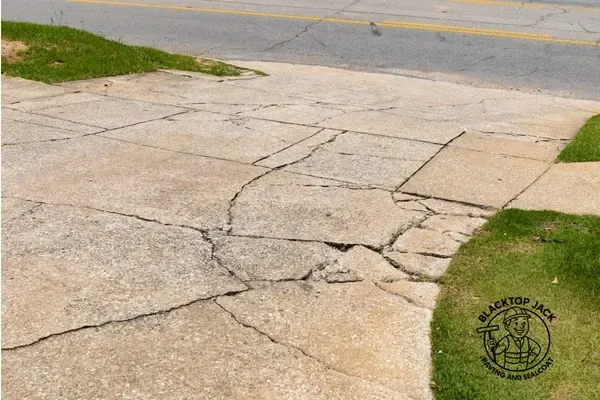
Cracks that keep widening or multiplying across the surface
One or two isolated potholes in an otherwise decent driveway
Standing water that pools in certain spots after rain
A driveway surface that feels soft, spongy, or uneven underfoot
Old patch repairs that have already failed and cracked again
The confusion sets in because both patching and full replacement can technically fix these problems short-term. But without understanding what's actually happening beneath the surface, homeowners often end up making a decision based on price alone rather than what will actually last.
Understanding the Real Difference Between Patching and Replacing
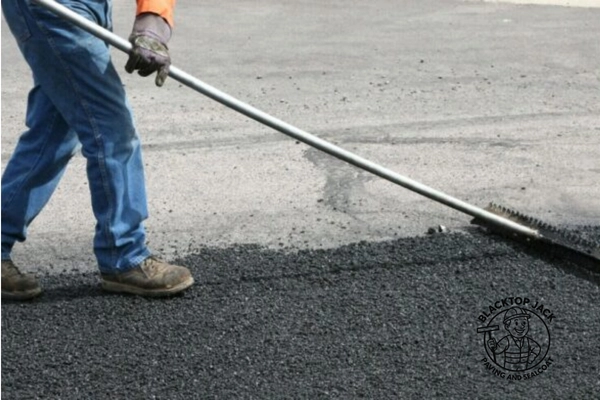
Before deciding, it helps to understand what each option actually does. A patch repair addresses a localized, surface-level problem it fills a crack or pothole without touching what's happening in the base layer beneath. A full replacement, on the other hand, removes the existing surface entirely and often the base beneath it, rebuilding the driveway from the ground up.
The key question that determines which one you need isn't "how bad does it look," but rather "is the damage isolated to the surface, or has it spread to the foundation beneath it?" A driveway that has a solid foundation, but a compromised surface is a good place to add a patch.
A driveway with widespread cracking, sinking sections, or a compromised base underneath is telling you that patching will only be a temporary, expensive delay before replacement becomes unavoidable anyway.
The Solution: How to Decide Between Patch and Replace
Here's a practical breakdown to help you evaluate your own driveway's condition before calling a contractor.
Sign | Patch Is Likely Enough | Replacement Is Likely Needed |
|---|---|---|
Crack size | Small, isolated hairline or single cracks | Wide, spreading, interconnected cracks (alligatoring) |
Number of problem areas | 1–3 localized spots | Damage spread across most of the surface |
Age of driveway | Under 12–15 years old | 15+ years old with visible wear throughout |
Base condition | Stable, no sinking or shifting | Sinking, uneven, or soft in multiple areas |
Drainage | Water drains normally elsewhere | Water pools across large sections |
Previous repairs | First-time repair needed | Multiple past patches have already failed |
Estimated cost | $150 – $500 per patch area | $3,500 – $8,000+ for full replacement |
If your driveway falls mostly into the "patch" column, a repair is usually the smarter, more cost-effective choice especially if the rest of the surface is holding up well. But if you're seeing several signs from the "replacement" column, particularly a compromised base or widespread alligator cracking, patching becomes a short-term fix that will likely fail again within a year or two, meaning you'd effectively be paying twice.
For homeowners still unsure which category their driveway falls into, this detailed resource on asphalt driveway repair walks through additional diagnostic signs and repair techniques that can help clarify which path fits your specific situation.
Why Patch Jobs Sometimes Fail Faster Than Expected
One frustration homeowners run into is patching a driveway only to see the same crack or pothole reappear within months. This usually isn't a sign that patching doesn't work it's a sign that the underlying base was already compromised, and the patch was only ever treating a symptom rather than the cause. This is exactly why professional evaluation matters before committing to a repair. A qualified asphalt contractor near me search should lead you to someone who inspects the base condition, not just the visible surface, before recommending a specific fix.
Skipping this evaluation step is one of the most common reasons homeowners end up frustrated, having paid for a patch that didn't actually solve their problem. A proper assessment takes into account soil conditions, drainage patterns, and how the driveway has aged, giving you a realistic picture of whether patching will actually hold.
The Role of Pavement Maintenance in Avoiding This Decision Altogether
The best way to avoid facing a difficult patch-versus-replace decision is consistent pavement maintenance from the start. Driveways that receive regular sealcoating, prompt crack sealing, and routine inspection rarely reach the point of widespread base damage that forces a full replacement. Small cracks caught early and sealed within weeks rarely turn into the kind of deep, spreading damage that eventually requires tearing up the entire driveway.
For driveways that are already showing wear, maintenance still plays a role even after a repair decision is made. Once a patch is completed, sealcoating the surrounding area helps protect the new patch from water infiltration, extending its lifespan considerably. Similarly, after a full replacement, staying on top of pavement maintenance from year one is what determines whether your new driveway lasts the full 20 to 30 years it's capable of, or starts showing the same problems again within a decade.
What Happens If You Ignore the Problem Entirely
It's worth addressing directly: doing nothing is rarely the cheaper option. A small crack left unsealed allows water to penetrate down into the base layer, where freeze-thaw cycles through a Morris County winter can turn a minor surface issue into a major structural one. What might have cost $200 to patch this year can easily become a $6,000 replacement within two or three years if left unaddressed. If you're already noticing signs of damage and searching for driveway repair near me, addressing it sooner rather than later is almost always the more financially sound decision.
How to Get an Accurate Assessment for Your Driveway
Since patch-versus-replace decisions depend heavily on what's happening beneath the surface, the most reliable way to know for certain is a professional, in-person evaluation. A qualified contractor will typically check the depth and pattern of cracking, test for soft or sinking spots that indicate base failure, assess drainage and grading around the driveway, and review the age and history of previous repairs. This gives you a clear, honest recommendation rather than a guess based on surface appearance alone and it protects you from either overpaying for an unnecessary replacement or underpaying for a patch that won't hold.
Frequently Asked Questions
1. How do I know if my driveway needs a patch or a full replacement?
If the damage is limited to one or two isolated cracks or potholes and the base underneath feels stable, a patch is usually enough. If cracks are widespread, interconnected, or sections feel soft and sinking, the base is likely compromised and full replacement makes more sense.
2. What is the average asphalt driveway repair cost in Morris County?
A typical patch repair costs between $150 and $500 per problem area, depending on size and depth of damage. A full driveway replacement generally runs from $3,500 to $8,000 or more, depending on square footage and site conditions.
3. How long does a patched driveway typically last?
A well-done patch on a driveway with a stable base can last several years, especially when paired with regular sealcoating. If the base was already weak, a patch may fail within months, signaling that replacement was actually the better option.
4. When should I call an asphalt contractor near me instead of trying a DIY patch?
DIY patch kits can work for very minor, shallow cracks, but if you're seeing sinking areas, alligator cracking, or repeated failures of past patches, it's time to bring in a professional who can properly assess the base before recommending a fix.
5. Can regular pavement maintenance prevent the need for replacement?
Yes. Consistent pavement maintenance including sealcoating every 2 to 3 years and sealing small cracks as soon as they appear significantly reduces the chances of your driveway reaching the point of requiring full replacement.
6. Is it cheaper in the long run to patch instead of replace?
Only if the base is still in good condition. Patching a driveway with a failing base often means paying for repeated repairs that don't hold, which ends up costing more over time than simply replacing the driveway once and doing it right.
Get an Honest Assessment From Morris County's Trusted Paving Team
If you're stuck deciding whether your driveway needs a simple patch or a full replacement, don't leave it to guesswork. Blacktopjack.com provides honest, no-pressure evaluations for Morris County homeowners, examining your driveway's base condition, drainage, and damage pattern before recommending the most cost-effective solution not just the most expensive one. From minor repairs to complete driveway replacement and ongoing pavement maintenance, our team helps you make the right call the first time. Contact us today for a free inspection and a clear, straightforward estimate.
The Takeaway
Deciding between patching and replacing your driveway in Morris County comes down to one core question: is the damage isolated to the surface, or has it compromised the base beneath it? Small, localized cracks on a driveway with a stable foundation are usually great candidates for patching, while widespread cracking, sinking, or repeated failed repairs are signs that full replacement is the more cost-effective long-term choice. Whichever path fits your driveway, committing to consistent pavement maintenance afterward is what protects your investment and helps you avoid facing this same difficult decision again in just a few short years.