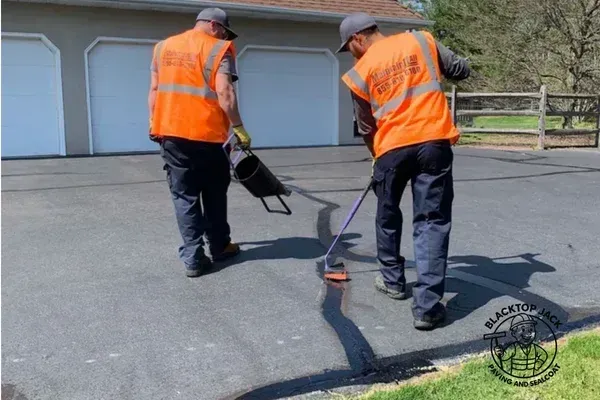
Why Most Driveway Maintenance Advice Fails (And What Actually Works)
Introduction:
Search "how to maintain your driveway" and you'll get thousands of articles recommending the same handful of tips, yet the average asphalt driveway in America still fails 5 to 10 years earlier than its engineered lifespan which raises an obvious question: if the advice is everywhere, why isn't it working?
If you've followed the standard checklist sealed a crack here, hosed off some debris there, maybe scheduled a sealcoat when you remembered to and your driveway is still cracking faster than it should, you're not doing anything wrong on the surface. The problem is that most driveway maintenance advice is written to be generic enough to apply to everyone, which means it ends up being specific enough to help almost no one.
This is one of the most frustrating experiences for homeowners and property managers: doing what you were told, watching your pavement deteriorate anyway, and having no idea whether you did something wrong or whether the advice itself was flawed from the start. In most cases, it's the second one.
Let's break down exactly why so much common driveway advice underdelivers, and more importantly, what actually moves the needle when it comes to keeping asphalt in good condition for decades instead of years.
The Problem With Generic Maintenance Advice
Most articles on driveway care are written to rank well in search results, not to solve a specific homeowner's specific pavement problem. That distinction matters more than it sounds like it should.
It ignores climate entirely. A maintenance schedule built for Arizona's dry heat is fundamentally different from one built for a region that goes through dozens of freeze-thaw cycles every winter. Generic advice tends to average these differences out into vague recommendations like "seal your driveway periodically," without specifying when, how often, or why timing matters as much as it does.
It treats symptoms instead of causes. Telling someone to "fill cracks when you see them" without explaining why cracks form, how fast they progress, or what's happening underneath the surface leaves people reacting to visible damage instead of understanding the process well enough to prevent it.
It skips the base layer entirely. Nearly every generic guide focuses exclusively on the surface — sealcoating, crack filling, cleaning. Almost none of them explain that most catastrophic pavement failure actually starts with base layer problems that no amount of surface-level care can fix.
It gives frequency without context. "Sealcoat every 2-3 years" is common advice, but it doesn't account for traffic volume, climate severity, or the condition of the pavement underneath. A driveway with heavy daily use in a harsh climate needs a completely different rhythm than one with light use in a mild one.
The result is a mountain of well-intentioned but ultimately shallow advice that leaves people going through the motions of driveway maintenance without actually addressing the mechanisms that cause pavement to fail.
What Actually Determines Whether Advice Works
Effective pavement maintenance isn't about following more steps it's about understanding a smaller number of principles well enough to apply them correctly to your specific situation. Here's what separates advice that actually extends driveway life from advice that just sounds reasonable.
1. It starts with diagnosis, not prescription. Before recommending any action, effective maintenance guidance asks: what stage is this damage at, and what's causing it? A hairline crack from surface oxidation needs a different response than a crack caused by base settling underneath it. Treating both the same way with a generic crack filler addresses one and does nothing for the other.
2. It accounts for your specific conditions. Traffic volume, climate, drainage, and the age and condition of your existing pavement all change what "proper maintenance" actually looks like. A one-size-fits-all schedule ignores all of this.
3. It prioritizes timing over frequency. Sealing a crack in October before winter arrives is far more valuable than sealing the same crack in June, even though both technically count as "crack sealing." Advice that doesn't account for seasonal timing misses one of the most important variables in whether a treatment actually works.
4. It distinguishes cosmetic issues from structural ones. Surface fading is a cosmetic concern that sealcoating addresses well. A sinking section of pavement is a structural concern that no amount of sealcoating will fix. Generic advice often lumps these together under the same "maintenance" umbrella, leading people to spend money on treatments that don't address their actual problem.
Common Advice vs. What Actually Works
Common Advice | Why It Falls Short | What Actually Works |
|---|---|---|
"Seal cracks when you see them" | Doesn't explain urgency or seasonal timing | Seal cracks immediately, prioritizing pre-winter timing in cold climates |
"Sealcoat every 2-3 years" | Ignores traffic load and climate severity | Base sealcoating frequency on traffic volume, climate, and prior pavement condition |
"Clean your driveway regularly" | Vague about what's actually harmful | Prioritize immediate removal of oil, gas, and de-icing chemicals specifically |
"Watch for potholes" | Reactive, addresses damage after it's already structural | Monitor for early warning signs like alligator cracking before potholes form |
"Hire a contractor when it looks bad" | Waits until damage is already expensive to fix | Get a professional assessment at the first sign of cracking, regardless of severity |
Notice the pattern: the common advice isn't necessarily wrong, it's just incomplete. It tells you what to do without explaining when, why, or how it fits into the bigger picture of pavement deterioration.
The Three-Layer Framework That Actually Works
Instead of following a generic checklist, effective driveway maintenance operates on three distinct layers, each requiring different attention.
Layer 1: Surface Protection This includes sealcoating, cleaning spills, and general surface care. It's the most visible layer and the one most generic advice focuses on exclusively. It's important, but it's also the easiest layer to get right and the least likely to cause catastrophic failure on its own.
Layer 2: Crack and Joint Management This is where timing matters most. A crack is essentially an open door for water, and how quickly and how correctly it's sealed determines whether it stays a minor cosmetic issue or becomes a structural one. This layer requires understanding seasonal timing, not just reactive patching.
Layer 3: Base and Drainage Integrity This is the layer almost entirely ignored by generic advice, and it's the one that actually determines your driveway's long-term structural lifespan. Poor drainage, inadequate base compaction from installation, or water infiltration that's reached the base layer can't be fixed with surface treatments. This is also where driveway repair becomes necessary rather than optional maintenance once base integrity is compromised, patching the surface is a temporary fix at best.
Most driveway failures trace back to layer three being ignored while homeowners focus exclusively on layer one. You can sealcoat a driveway every single year and still watch it fail prematurely if water has already compromised the base underneath.
How to Tell Which Layer Your Driveway Actually Needs
Sign You're Seeing | Likely Layer Affected | Recommended Action |
|---|---|---|
Faded, dull surface color | Layer 1 (Surface) | Schedule sealcoating |
New hairline cracks | Layer 2 (Crack Management) | Seal promptly, especially before winter |
Spreading spiderweb cracks | Layer 2 transitioning to Layer 3 | Get a professional assessment soon |
Standing water after rain | Layer 3 (Drainage) | Address grading or drainage issues immediately |
Sinking or uneven sections | Layer 3 (Base) | Requires professional evaluation and likely excavation-based repair |
Potholes forming | Layer 3 (Base failure) | Full-depth patching or base repair needed |
This kind of diagnostic thinking is exactly what's missing from most generic advice, and it's the difference between maintenance that actually protects your investment and maintenance that just keeps you busy without addressing the real problem.
When Maintenance Isn't Enough Anymore
There's an important distinction between maintenance and repair that generic advice often blurs entirely. Maintenance is what you do to protect pavement that's still structurally sound. Repair is what's needed once damage has already compromised that structure. Confusing the two leads to a common and expensive mistake: treating a structural problem with a maintenance-level solution, watching it fail again within months, and concluding that "maintenance doesn't work" when the real issue was applying the wrong category of fix.
If you're seeing signs from the lower half of the table above standing water, sinking sections, or spreading potholes you've moved past what routine driveway maintenance can address on its own. At that point, proper asphalt driveway repair becomes necessary before any maintenance routine can be effective again. Our detailed breakdown on asphalt driveway repair covers exactly how professionals evaluate whether a section needs patching, base repair, or full replacement, so you can understand what you're actually dealing with before committing to a fix.
Building Advice Around Your Actual Driveway
The most effective thing you can do differently starting today isn't following a new checklist it's asking better questions about your specific pavement before taking action:
What's my climate actually doing to this pavement throughout the year?
Is this damage cosmetic (surface) or structural (base)?
When did this crack or issue first appear, and how fast has it progressed?
Is my drainage directing water away from vulnerable areas, or letting it pool?
Am I treating symptoms, or addressing the underlying cause?
Answering these honestly, even without professional training, puts you in a far better position than blindly following a generic maintenance calendar that was never built with your specific driveway in mind.
Bringing It All Together
Most driveway maintenance advice fails not because it's wrong, but because it's incomplete. It focuses on surface-level actions while ignoring the timing, climate factors, and structural layers that actually determine whether pavement lasts its full lifespan or fails a decade early. Real pavement maintenance requires diagnosis before prescription, an understanding of the three layers of pavement health, and the judgment to know when routine maintenance has been outpaced by damage that needs actual repair.
Clear takeaway: Generic driveway maintenance advice treats every driveway the same. Effective driveway maintenance treats your driveway as what it actually is — a structure with specific climate exposure, specific traffic patterns, and specific damage that needs to be diagnosed, not guessed at.
Get Maintenance Advice Built Around Your Actual Driveway
Stop guessing whether generic advice applies to your situation. Blacktop Jack provides honest, driveway-specific assessments that identify exactly which layer of your pavement needs attention, whether that's a simple sealcoat, targeted crack sealing, or a repair that addresses base-level damage before it gets worse.
Request your free, no-obligation driveway assessment today and get a maintenance plan built around your actual pavement, not a generic national checklist.